

The popular picture of a successful entrepreneur is a 22-year-old who drops out of college and builds a billion-dollar company. The data tells a different story.
A large study by researchers from MIT, Northwestern, and the US Census Bureau found that among the fastest-growing new companies in the US, the average founder was 45 years old. They also found that founders with experience in the same industry had much higher success rates. In other words, success has less to do with a “born entrepreneur” personality and more to do with traits and skills you can build over time.
This guide covers the 10 traits of successful entrepreneurs that matter most in practice, with a simple way to develop each one, whether you’re starting a side business, freelancing, or planning your first startup.
Successful entrepreneurs tend to focus on real customer problems, take calculated risks, stay resilient after setbacks, keep learning, use resources creatively, make decisions without perfect information, manage their time and money well, build strong relationships, and adapt quickly when the market changes. Most of these traits can be learned.

Table of Contents
Why These Traits Matter: The Reality of Starting a Business
Starting a business is hard, but it’s not as hopeless as the old myth that “most businesses fail in the first year.” Bureau of Labor Statistics data on US businesses that opened in 2013 shows that the biggest drop happened in the first year, when about 20% closed. By 2023, 34.7% of them were still operating.
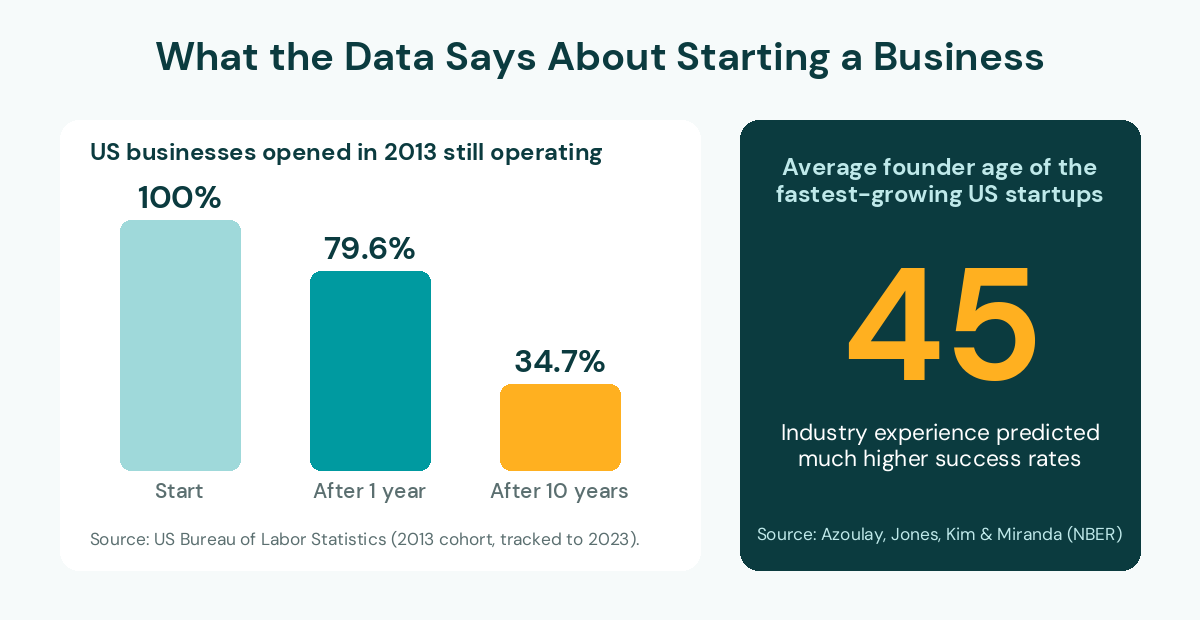
Those numbers explain why the traits below matter. They’re the habits that help a business get through the risky early years and keep improving after that.
1. They Focus on a Real Customer Problem
Successful entrepreneurs start with a problem people will pay to solve, not just an idea they love. They talk to potential customers early, listen to complaints, and look for gaps that existing products don’t fill.
How to build it: before you build anything, interview 10 people in your target market. Ask what frustrates them, what they’ve already tried, and what they’d pay for a better option.
2. They Take Calculated Risks, Not Blind Ones
Entrepreneurs aren’t reckless. The good ones test ideas cheaply before betting big. A food entrepreneur in Austin might sell at a weekend farmers’ market for three months before signing a lease on a restaurant.
How to build it: for every big decision, ask “What’s the smallest, cheapest version of this I can test first?” Then set a clear limit on how much time and money you’ll risk.
3. They’re Resilient After Setbacks
Lost clients, failed launches, and slow months happen to everyone. What separates successful entrepreneurs is how quickly they recover and what they learn from it.
How to build it: after any setback, write down three things: what happened, what you’d do differently, and the next action you’ll take this week. It turns failure into a plan.
4. They Never Stop Learning
The research on founder age points to something important: experience matters. Founders who had worked in the same industry before starting their company were far more likely to succeed. Successful entrepreneurs keep building that knowledge through courses, books, mentors, and customer feedback.
How to build it: block one hour a week for learning that’s directly tied to your business, such as sales, marketing, or financial basics.
5. They’re Resourceful and Creative
Most new businesses don’t have big budgets. Successful entrepreneurs find creative ways to do more with less: free tools, partnerships, bartering services, or doing things manually before paying for automation.
How to build it: when you hit a problem that seems to need money, list three ways to solve it without spending anything first.
6. They Make Decisions Without Perfect Information
Waiting for certainty means missing opportunities. Successful entrepreneurs gather enough information to make a sensible decision, act, and then adjust based on results.
How to build it: give yourself a deadline for every decision. For small, reversible choices, decide the same day. Save longer research for decisions that are expensive to undo.
7. They’re Self-Disciplined and Manage Time Well
Without a boss setting deadlines, it’s easy to spend the day on email and social media. Successful entrepreneurs protect time for the work that actually grows the business.
How to build it: start each day by choosing the one task that would make the biggest difference to revenue or customers, and do it before anything else.
8. They Understand Their Numbers
You don’t need an accounting degree, but you do need to know your revenue, costs, profit margin, and cash flow. Many profitable-looking businesses get into trouble because cash runs out before customers pay.
How to build it: review a simple monthly report of income, expenses, and cash in the bank. Free tools like Wave or a basic spreadsheet are enough to start.
9. They Build Strong Relationships
Customers, mentors, partners, and early team members all play a part in a business’s success. Entrepreneurs who build genuine relationships get more referrals, better advice, and more support when things go wrong.
How to build it: reach out to one person each week to help them, thank them, or simply stay in touch, with no request attached. Building an email list is one of the best ways to stay connected with customers at scale. See our guide on how to build an email list from scratch.
10. They Adapt When the Market Changes
New technology, new competitors, and shifts in customer behaviour can change a market quickly. AI tools are a current example: they’re changing how businesses write, design, and serve customers. Successful entrepreneurs notice these shifts early and adjust instead of defending the old way.
How to build it: every quarter, ask your customers what’s changed for them, and review whether any new tool could save you time or improve your product. Our guide on how to use AI for blogging is a practical place to start.
Frequently Asked Questions
Are entrepreneurs born or made?
Mostly made. Some people are naturally more comfortable with risk, but the research on experienced, middle-aged founders suggests that knowledge and skills built over time matter a great deal. Every trait in this list can be practised.
What is the most important trait of a successful entrepreneur?
There’s no single trait, but focusing on a real customer problem comes close. A great product nobody needs will fail regardless of how resilient or disciplined the founder is.
Can I become an entrepreneur while working a full-time job?
Yes, and it’s often the safer route. Many people start with freelancing or a small side business to test demand before leaving their job. Our guide on how to start freelancing with no experience is a practical first step.
Is it too late to start a business in my 40s or 50s?
No. The research above found that the average founder of the fastest-growing new US companies was 45, and industry experience was linked to higher success rates.
Start Building the Traits of Successful Entrepreneurs Today
The traits of successful entrepreneurs aren’t a fixed personality type. They’re habits: talking to customers, testing ideas cheaply, learning from setbacks, watching your numbers, and adapting as things change.
Pick one trait from this list where you’re weakest and use the “how to build it” step for the next 30 days. Small, consistent improvements add up faster than you’d expect.
Join the DigiSmart Skills newsletter for step-by-step advice on freelancing, starting a business, and growing online. Learn. Build. Grow.